Coaching
An alliance on measurement
An approach that is demanding, both human and inspired
I'm Christine Bessiere, RNCP level 6 certified professional coach, ACC accredited by the ICF (International Coaching Federation).
I respect the code of ethics of the ICF, which I fully agree, and I am regularly supervised to ensure the quality, ethics, and the depth of my cover.
Professional coaching for executives & transformational leadership :
Professional coaching enables executives and managers to gain clarity, impact, and peace of mind. I support you in overcoming obstacles, strengthening relationships, making informed decisions, and embodying aligned leadership.
Common issues:
• Complex relationships within the Executive Committee or with teams
• Communication difficulties
• Stress, tension, mental load
• Lack of vision, perspective, or prioritization
• Career transition or starting a new job
My method:
I incorporate noetics (living thought), emotional intelligence, maieutics, and powerful approaches such as TA, NLP, Enneagram, Spiral Dynamics, and NVC into my coaching.
Deep support that brings lasting change.
Benefits of Coaching - Noetica Consulting:
• Deep-rooted, conscious, and authentic leadership
• Smooth and calm communication
• Clear and aligned decisions
• Enhanced strategic vision
• Fair and committed managerial relationships
«Leadership based on inner clarity, and managerial relationships that combine high standards, trust, and responsibility.»
Professional co-development and collective intelligence:
As a certified co-development group facilitator with Activision Coaching Institute, I lead co-development groups that enable people to learn together, solve problems more quickly, and advance the entire organization.



My identity coach
My coaching is at the crossroads between science and art, intuition and method, performance, and humanity.
My listening is fine, sensitive, committed. I create for each client a space of trust deep, based on the non-judgment, respect and confidentiality.
I accompany you with humility but requirement, always rooted in the reality of your business issues, including those of cost-effectiveness, leadership and transformation management.
But I never forget the essential : your potential, your journey, your pace.
My specialties & tools
I got trained from recognized institutions in order to enrich my posture with powerful approaches and complementary :
- Transactional analysis – certified by the EATA (European Association for Transactional Analysis)
- NLP was formed by the Institute Cue
- Enneagram – by Coaching Ways
- Spiral Dynamics – by Coaching Ways
- Non-Violent Communication – according to the approach of Thomas d'ansembourg
- Facilitation of groups of co-development – certified by Activision Coaching Institute
These tools are instruments of resonance. They are never applied mechanically, but always at the service of a journey in extent, depending on what you are ready to explore.
Who is it for ? For what ?
My coaching is aimed to :
- Leaders and managers in search of clarity, posture and meaning
- Managers wishing to develop their leadership style
- Professionals in transition, conversion or evolution
- Teams looking to better cooperate, to decide, to innovate
- New recruits have recently been integrated in the framework of an onboarding strategic
An alliance on measurement
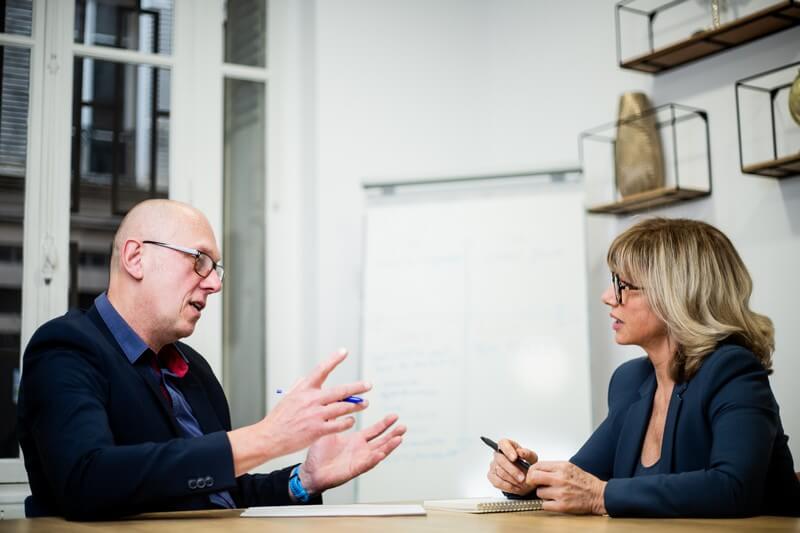
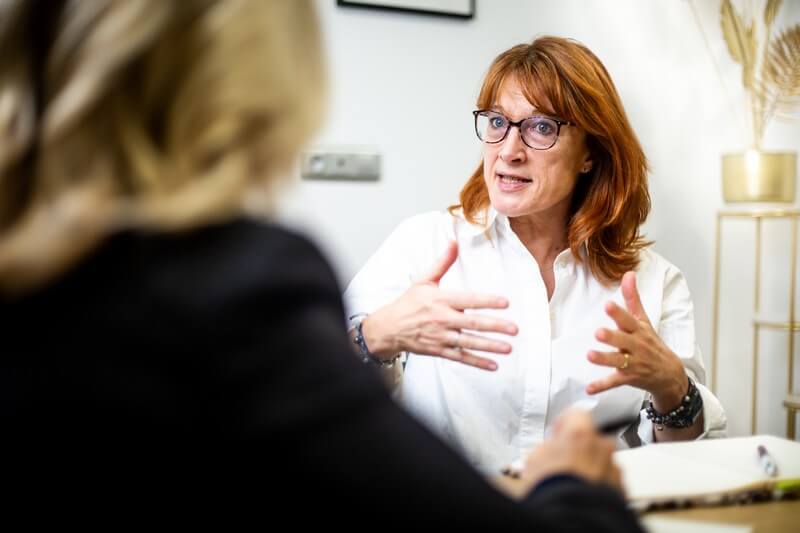
A good coaching is based on a relationship of trust, a secure and authentic.
My mission is to help you clarify your goals, removing blockages, deploy your resources, and move towards choices that are aligned and sustainable.



Frequently asked questions
Understanding of the professional coaching
What is professional coaching ?
Professional coaching is a coaching structured, confidential, and oriented towards the objective of the client. It allows for the emergence of awareness, empower and promote the transition to the action. The coach does not provide a ready-made solution : it facilitates the emergence of those of the customer.
What is the etymology of the word "coaching" ?
The word coach comes from the French word "coach" as a car pulled by a horse, that carries a person from point a to point B. The coach is the one who goes with you where you need to go, at your own pace.
Why Socrates, with the maieutic, was already coaching ?
Socrates used the self, or the art of giving birth to the spirits, to bring its audience to discover for themselves their truths through a questioning and rigorous. He does not pass his knowledge, it was revealed that of the other. This posture is in the heart of the professional coaching.
What is awareness in coaching ?
This is a key moment where the client understands something fundamental about himself, his beliefs, patterns or blockages. This awareness opens up a new perspective, often a decisive factor for the change.
What is the tasking in coaching ?
This is a proposal for concrete action to experiment between two sessions, with the goal of coaching. The tasking anchor the awareness in the real world. It is an experiment a volunteer, not an injunction.
What is the overall objective of coaching?
This is the goal that the client wishes to achieve at the end of the coaching process: clarifying a direction, making a decision, developing leadership skills, rediscovering meaning, etc. It is defined during the first session and serves as a compass throughout the process. Each session will have a specific objective related to the overall goal.
What is the difference between an overall goal and a session goal?
The overall goal provides the general direction. The session goal is a concrete step specific to each meeting. It allows progress to be made step by step toward the overall goal, taking into account what is relevant to the client here and now.
Who chooses the overall goal and the goal for each session?
It is always the client. The coach helps to clarify and formulate, but the content of the coaching comes from the person being accompanied. This ensures the commitment, autonomy and the relevance of the process.
Why do we say that coaching is a co-creation ?
Because the coach does nothing. It is built with the customer in a dynamic alliance. The framework is laid down by the coach, the content comes from the client. Together, they co-construct a path of evolution that is unique.
What coaching is not.
This is not advice, therapy, or training. The coach does not give solutions, it does not care and does not transmit knowledge. It helps to clarify, to decide, to put it in motion.
Coaching, mentoring and alternatives
Why the changes are more profound and sustainable coaching in mentoring ?
Because the solutions come from the client, and not the mentor. They are, therefore, more aligned, a better integrated and more sustainable. Coaching develops autonomy and the critical sense.
When the mentoring is best ?
Mentoring is suitable when a person wishes to benefit from the direct experience of a peer : socket extension, retraining and professional transition, etc
Y a-t-il situations where coaching is not suitable ?
Yes. Some situations require quick responses or contributions focus : preparation to a speech, training to be a strategic maintenance, etc, In this case, the mentoring and the board may be more suitable.
Why a mentor is trained in coaching, he more impact ?
Because he knows how to ask questions, listen, and adjust his or her posture. It does not project its responses, it creates a space where the other might think, choose, decide. It combines inspiration and accountability.
Professionalism and ethics
Why is it important for coaches to be supervised ?
Supervision allows the coach to take a step back on his practice, exploring its shadows, to remain aligned with its ethics. It is a pillar of the quality and safety of the accompaniment.
That represents the title of Coach certifiée RNCP ?
It is a certification that is recognized by the French State, attesting to a rigorous training, a level of competence validated, and an ethical commitment clear.
What is the SIMACS ?
The International Society of Business Support, Coaching, and Supervision brings together well-known actors in the business and ensures the quality of practice and training.
What does it mean to "set the frame" in coaching ?
It is to establish the rules of operation : duration, frequency, confidentiality, posture, and responsibilities. The frame secures and structure space of transformation.
What is a question powerful ?
This is a question that awakens, which opens up a new perspective, that moves the lines. It acts as a catalyst for awareness. It is simple, direct, and often unforgettable.
The tools that I incorporate in my practice
What is Transactional Analysis (TA) ?
It is a theory of human relations founded by Eric Berne, who identifies the three states of ego (Parent, Adult, Child). It allows us to understand the dynamics of and communicate better.
Who is Eric Berne ?
Psychiatrist canadian-american founder of the AT. He wanted to make psychology accessible, practical and pragmatic.
What does it mean to coaching with the Enneagram according to Max Meulemans ?
This is to accompany the customer by taking into account the type of personality, of his unconscious motivations and its defense mechanisms. The Enneagram is a tool of alignment and inner evolution.
What is coaching spiralien ?
It is based on the Dynamic Spiral of Clare W. Graves, a model mapping the levels of consciousness. It is a powerful tool to accompany the transitions, the resistance to change and systemic issues.
What is NLP ?
Neuro-Linguistic Programming explores the links between thinking, language and behavior. It offers tools to modify its representations and release its resources.
How to use NLP in coaching ?
By techniques such as anchoring, the cropping, the visualization, the alignment of logical levels... The NLP facilitates sustainable change and alignment staff.
What is NVC ?
Non-Violent Communication, developed by Marshall Rosenberg, is based on four steps : observation, emotion, need, demand. It invites a responsible communication, genuine and respectful.
Who is Marshall Rosenberg ?
American psychologist and founder of the CNV. It was inspired by Carl Rogers to propose an approach deeply humanistic communication.
Who is Thomas d'ansembourg ?
Presenter, former lawyer and belgian author, it is a great diffuser of CNV in the francophonie. His seminal book : "Stop being nice, be true ".
Co-development and collective intelligence
What is the co-professional development ?
It is a method created by Champagne & Payette, which is based on the collective intelligence of a group. From a real life situation brought by a participant, each of which contributes to the reflection in a structured and caring.
Who are Champagne & Payette ?
Two quebec researchers who have designed the co-development of business in the 1990s. Their method is based on the peer learning and cooperation.
What is a facilitator of group of co-development professional ?
This is the person who guides the group while respecting the process. It ensures the security of the framework, the quality of trade and the emergence of collective intelligence.
I am a certified facilitator of group of co-development by Activ-Vision.
Leadership, emotions and the quest for meaning
What does it mean to "manage your emotions" ?
It is learning how to recognize, understand, welcome... to not become overwhelmed. A good emotional increases the clarity, presence, and the quality of decisions.
What is the wheel of emotions ?
It is a tool developed by the psychologist Robert Plutchik, which lists the basic emotions, their intensities and their combinations. It helps to enrich their vocabulary and emotional to better regulate what it feels like.
What does it mean to "psychological safety" ?
It is the feeling that one can express themselves freely without fear of being judged or punished. It is essential to create environments of learning, innovation and collaboration sustainable.
Who is Amy Edmondson ?
A researcher at Harvard, she has conceptualized the psychological safety as a key factor in team performance. His work is recognized worldwide.
What does it mean to "find her" Why " ?
It is to recognize its profound reason, what gives meaning to their actions. The " Why "(Why) precedes the " How "and the" What ". It is a powerful engine of motivation.
Who is Simon Sinek ?
Speaker and author of the bestseller Start With Why, he developed the theory of the Golden Circle, a model and an inspiration to leaders and organizations.
 French
  English